
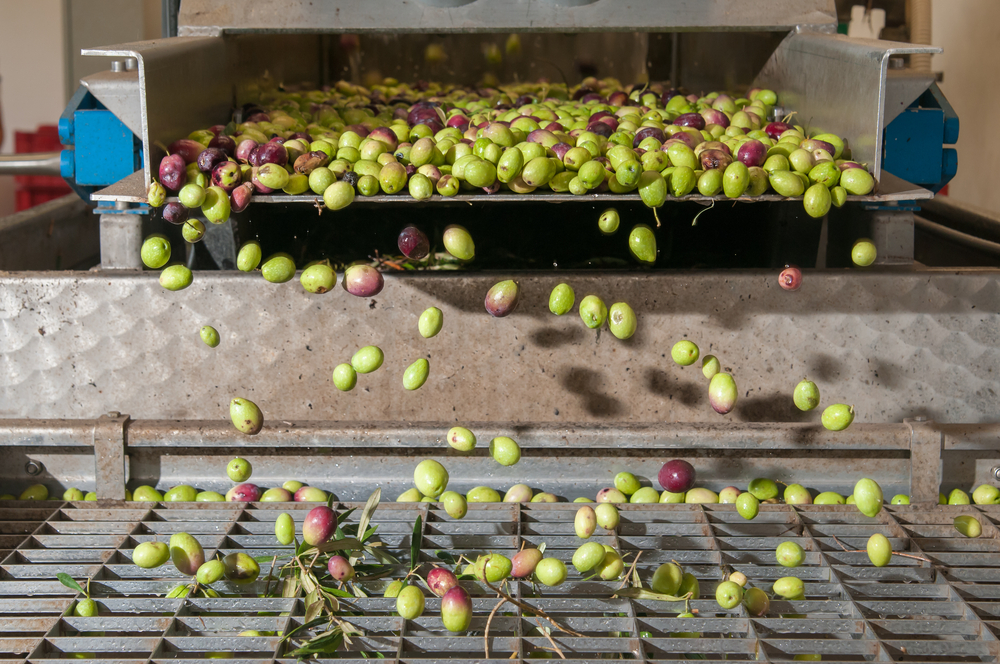
Owing to recent droughts in the Iberian Peninsula, the production of olive oil has been reduced and the leadership of Spain is under threat. Now more than ever the oil mills have to take care of the product to preserve the properties of the valuable liquid gold. In these uncertain times, JAR Idelfonso Rosa Ramírez e Hijos SL, turned to WEG, the leader in electrical and electro-electronic equipment, to acquire the motors that will purify olives to produce extra virgin oil.
Production problems
Spain is the world’s largest exporter of olive oil, accounting for approximately 65% of its overall sales according to data from the Spanish Ministry of Agriculture, Fisheries and Food. Weather conditions have significantly impacted harvests. As per the European Union, European olive farmers produced nearly 2.3 million tons of oil in the 2021/22 period. In 2022/23, the figure dropped to just under 1.4 million tons.
The droughts have escalated production costs, and the indispensable role of olive oil in cooking has made its price to skyrocket. The Weekly Bulletin of the Ministry of Agriculture provides price updates, and in the week of May 22 to 28, we can see that extra virgin olive oil stood at 6 euros per kilo, 78% more expensive than a year ago.
Dispelling Misconceptions
Appropriate treatment of olives during cultivation, harvesting, and processing is critical for maintaining oil quality. After the harvest arrives at the mill, the first step is the removal of residues, leaves, branches and impurities, such as dust, stones, pits and small fruits. It is estimated that these remnants constitute over 10% of the total cargo weight.
The cleaners are employed to remove the leaf and the soil from the olive in order to ensure an excellent end product. Since the unloading of the collection by the farmer, which is carried out in the reception hopper, the olive goes through the cleaner, which consists of vibrating screens and fans.
Next, the small branches that have remained in the destemmer are eliminated, to transfer the olive to the washing machine, where the stone and the remaining soil are extracted. This step, apart from sanitising the fruit, avoids wear and tear on the rest of the machinery of the plant. The process ends in the scale, where the load of the clean olives is calculated in an automatic weighing process by cycles. Finally the olives are stored clean and ready to proceed with the extraction of the oil.
Certain suppliers neglect cleaning techniques due to the unfounded belief that washing alters the oil’s flavour. While incorrect machinery usage could potentially impact oil properties, this process is indispensable for preparing the olives. The correct advice to the mill staff is essential to make the right purchase decisions and obtain the best possible oil.
Olive treatment has received less attention than other practices in oil production due to this belief, which has led to minimal advancements in washing equipment. According to a study by Alfonso Montaño, head of the R+D project at the Agro-Food Technology Center of Extremadura (CTAEX), improvements to this machinery are possible to implement in factories, contingent upon demand from mills and farmers.
Equipment management
Located in Mancha Real (Jaen), the primary olive oil-producing province in the world, JAR manufactures machinery for olive, almond, and pistachio receiving plants, mostly. In their catalogue they include cleaners, washers, destemmers, weighers in accordance with legal metrology and pulp-bone separators. Founded in 1973 by Ildefonso Rosa Ramírez, today his business is run by the second generation and is celebrating its 50th anniversary, coinciding with the 25th anniversary of WEG Iberia.
Following the assembly and installation of machinery in a client’s oil mill, they detected that one of the cleaner’s W21 10CV motors should have a voltage of 220V instead of 380V due to the unusual connection of the factory. Due to their long relationship with WEG Iberia, they decided to contact us urgently to resolve the problem.
Tailored solutions
JAR contacted its supplier of electric motors in the area, and in less than 48 hours they received a 220V W21 motor, a record time response. This situation coincided with the start of the olive harvest and the mill needed to be ready that same week.
Thanks to WEG’s excellent communication and prompt delivery, they were able to solve the client’s problem within the agreed deadlines, which avoided any delay in the olive oil process for the mill members and it was a successful campaign for one of the main factories of oil in the region.
The W21 motor is equipped with an aluminium housing and removable feet to provide great flexibility and easy setup, without requiring additional machining or modifications. Its features include its connection box, which can be rotated in 90-degree increments, allowing the connection of the motor cables from any desired direction. In addition to manufacturing a suitable motor to work in a specific environment, it was decisive to be able to comply with the customisation required by JAR staff and the mill’s demands regarding deadlines.
Collaboration, the key to success
“JAR advises commercially with the technical support of WEG, devising solutions tailored to each project’s needs,” says Sergio Romero, JAR’s technical engineer and business development manager. “Our aim is to ensure the longevity and effectiveness of each tool throughout its lifespan”.
Javier de la Morena, head of accounts and marketing at WEG Iberia, adds, ” Olive oil producers are increasingly discerning about machinery used in olive preparation, such as washing machines, demanding cutting-edge engine technology to maintain competitiveness in this market. At WEG, we offer innovative electrical and electro-electronic equipment that can be adjusted to meet sector-specific requirements.”
 WEG Europe and Middle East
Leave a comment