
~ How automation and international expansion are reshaping the role of equipment suppliers in modern feed mill construction ~
Compound feed producers are managing higher running costs, tighter environmental rules, fewer skilled operators and delivery schedules that leave little room for delay. In many feed mills, motor reliability, technical support and on-time deliveries directly affect whether projects stay on schedule and plants remain productive. Here, Marcio Ematsu, European marketing manager at WEG, the electric motor manufacturer, explains how motor supply and service support affect feed mill projects worldwide.
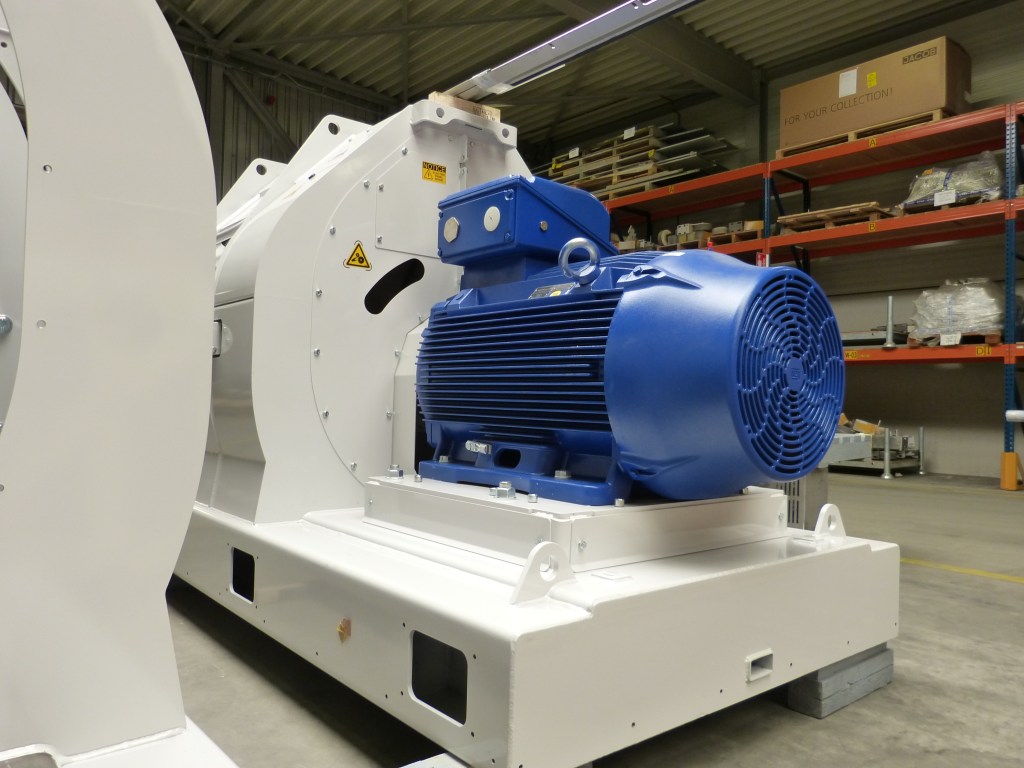
Operating from Panheel, near Roermond, Van Aarsen has 75 years of experience in compound feed mill construction. The company covers the full project, from factory design and construction through to the long-term supply of spare parts, wear parts and services. Its core offerings include hammer mills, presses and micro-dosing systems. For a business delivering complete feed mill installations, motor reliability affects project delivery, uptime and long-term service support.
The contraction of the Dutch livestock sector has pushed Van Aarsen’s work further overseas. Wageningen University & Research reported that the Netherlands had 1.9 per cent fewer cattle, 3.1 per cent fewer pigs and 4.1 per cent fewer chickens in 2024, while the sharpest decline in holdings was seen in dairy farming and intensive livestock farms. New factory builds in the Netherlands are now rare, with domestic activity focused mainly on conversions, renovations and maintenance work.
As more projects move overseas, access to motors, technical documentation and service support close to the customer becomes increasingly important. To support international projects, Van Aarsen requires suppliers with regional inventory, technical support and local installation and maintenance capabilities. WEG maintains operations in 44 countries and supplies products to more than 135 countries.
Operating across different markets creates a distinct set of engineering and regulatory challenges for every project. Feed for piglets can require different raw materials, processes and duty cycles than feed for laying hens, while local legislation can vary significantly from country to country.
“Every customer has different requirements that influence how a factory is designed,” said Conny Vluggen, deputy managing director at Van Aarsen. “One plant may produce feed for piglets, another for laying hens. The raw materials, process requirements and local regulations can all differ significantly.”
Van Aarsen’s approach is to treat each project as its own design problem, engaging with customers during the earliest planning stages to define the factory layout, optimise the process and establish costs before construction begins. That places practical demands on suppliers: they must provide the correct motor ranges, drawings, technical data, delivery certainty and local service support for each installation.
Automation as the answer to a shrinking skills base
Van Aarsen is building more process knowledge into its automation systems and into the factory itself. Its installations are built around long service life, maximum uptime, low maintenance requirements and minimal energy consumption, with automation and remote connectivity central to that philosophy.
The European Labour Authority’s 2025 labour shortage report found that shortages remain pronounced in key sectors and occupations, with trades and machine operators among the affected groups. Van Aarsen’s response is to build robust, well-secured automation into every installation and to offer customers continuous remote connectivity. When something goes wrong, the team can identify and resolve the issue quickly, wherever in the world the factory happens to be.
Closing the gap without sacrificing quality
Van Aarsen cannot compete on price alone. Competition from lower-cost suppliers has increased, placing greater emphasis on demonstrating the long-term operational value of equipment, support and engineering expertise. That means reducing avoidable engineering work, improving automation and showing customers where specialist suppliers reduce risk. By working with suppliers who combine competitive pricing with technical expertise, Van Aarsen can manage costs without eroding the quality standards its reputation depends on.
The right motors in the right range
WEG’s presence in the compound feed sector was well established before the Van Aarsen partnership began. Feed mills around the world operate using WEG motors, and several of Van Aarsen’s own customers had previously specified WEG products for their own projects.
The product range also aligned closely with Van Aarsen’s requirements. WEG supplies industrial electric motors for feed mill machinery from 5.5 to 500 kW, and roughly 80 per cent of Van Aarsen’s needs fall within the 75 to 400 kW band. That range covers most of its motor requirements and reduces the need to source from multiple suppliers. This includes WEG’s W22 range of low-voltage motors, which are widely used in industrial processing applications and align with the power requirements typically specified for feed mill equipment.
As delays in component supply can affect installation schedules and commissioning dates, access to regional inventory and local support can help minimise disruption when projects operate across different countries and time zones.
“We work with dozens of projects simultaneously,” said Koos Gielens, research and development manager at Van Aarsen. “If a supplier does not deliver on the agreed date, it can have a significant impact on production planning and ultimately on customer delivery schedules.”
Van Aarsen has also integrated WEG’s product data into its enterprise resource planning (ERP) system, giving engineers direct access to drawings and technical specifications while reducing manual data entry during project planning and procurement.
A long-term supplier relationship
Manufacturing remains central to Van Aarsen’s culture. Assembly and pre-delivery testing stay in Panheel, where the company can control quality before equipment is shipped. Other components are sourced from partners when they can deliver the right quality, documentation, price and support for the customer’s location.
For feed mill projects delivered internationally, supplier networks play an increasingly important role. Access to regional stock, technical documentation and local service support can simplify the project and after-sales support, particularly where installations are located far from the equipment manufacturer’s home market.
As feed production becomes more automated and projects become increasingly international, equipment suppliers are being assessed on more than product performance alone. Availability, technical support and supply chain resilience are becoming equally important considerations in keeping projects on schedule and plants operating reliably.

